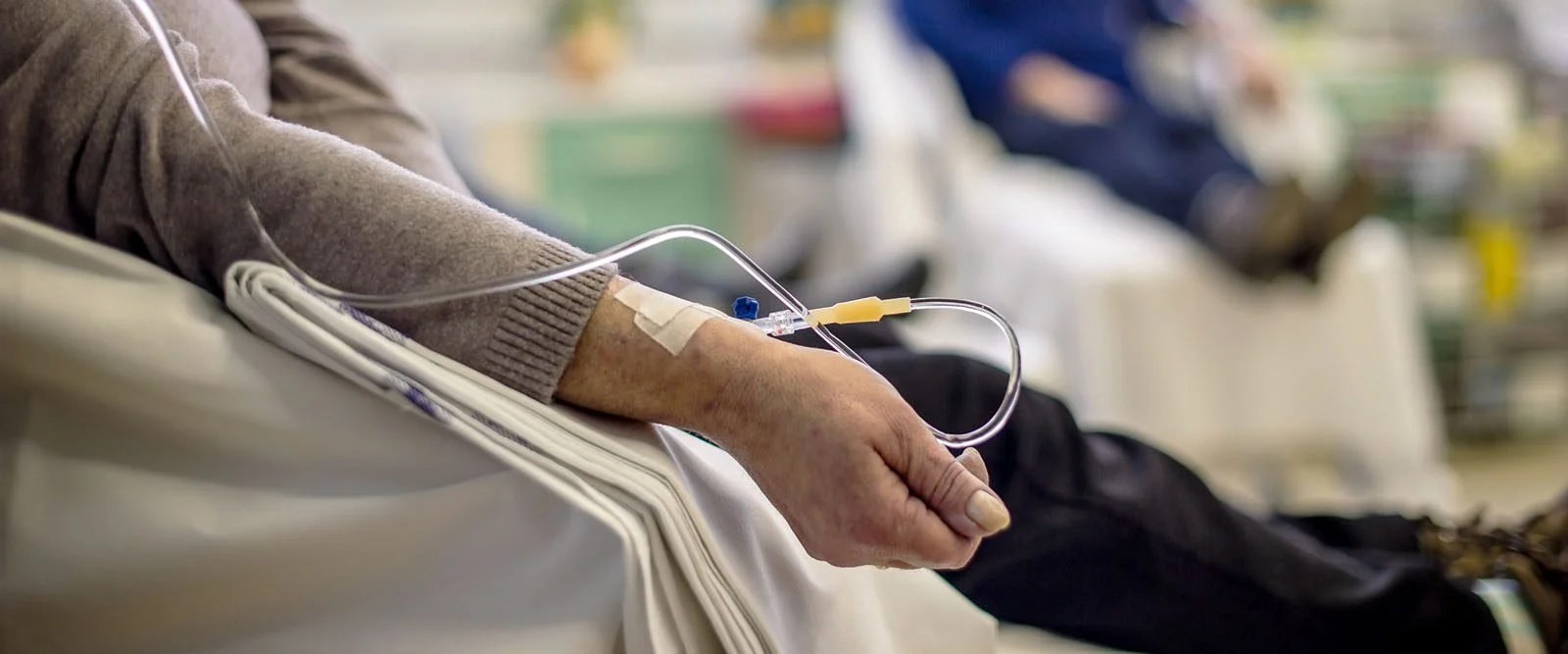
It's one of the most common questions I hear from people in active cancer treatment — and one of the most important to answer clearly. The short version is yes, massage can be safe during chemotherapy. The longer version is that safety depends entirely on the training of the therapist, the modifications they make, and the clinical judgment they bring to each session.
I work as a clinical massage therapist at Huntsman Cancer Institute's Wellness & Integrative Medicine Center, where I see oncology patients regularly in both outpatient and inpatient settings. This is what I want people to understand about massage during cancer treatment.
The concern — and why it's mostly misplaced
For a long time, there was a broadly held belief that massage could "spread cancer" by increasing circulation and moving cancer cells through the body. This concern is not supported by clinical evidence. There is no credible research demonstrating that massage causes metastasis, and major cancer centers — including Memorial Sloan Kettering, MD Anderson, and Huntsman — have integrated oncology massage programs as part of their care.
The real concern isn't massage itself. It's untrained practitioners applying inappropriate techniques to people whose bodies have been significantly altered by treatment. A trained oncology massage therapist, working with appropriate modifications, is a different matter entirely.
What makes oncology massage safe
- Pressure modification. Chemotherapy often reduces platelet counts, increasing bruising and bleeding risk. Deep pressure is contraindicated during active treatment; oncology massage uses significantly lighter pressure, adapted to what your body can tolerate that day.
- Site awareness. Port placements, surgical sites, radiation fields, areas of lymph node removal, and areas with bone involvement are all contraindicated for direct pressure. A trained therapist knows to work around these areas, not through them.
- Timing relative to treatment. There are better and worse days for massage during a chemo cycle — generally scheduling away from infusion days works better for most people, though tolerance varies. We talk through this at intake.
- Positioning. Many oncology clients can't lie flat comfortably, due to fatigue, port placement, or surgical restriction. Sessions are adapted — side-lying, semi-reclined, or fully bolstered.
- Ongoing reassessment. Your body changes week to week during treatment. Every session begins with a check-in specifically about how you're doing today.
What the research shows
Clinical research on oncology massage is clear on several outcomes. Studies conducted at institutions including Huntsman Cancer Institute and Memorial Sloan Kettering have found that oncology massage can meaningfully reduce nausea and vomiting associated with chemotherapy, pain levels, fatigue, anxiety and emotional distress, and sleep disruption. These aren't marginal effects — for people managing the cumulative physical and emotional burden of cancer treatment, they represent a genuine improvement in quality of life. I've seen this in my own clinical work, and in the research I contribute to at Huntsman.
What to look for in a provider
If you're considering massage during cancer treatment, the most important thing is finding someone with specific oncology training — not just a massage therapist who is "comfortable working with cancer patients." Ask directly: what modifications do you make for someone in active chemotherapy? What contraindications do you screen for? Have you worked with oncology patients in a clinical setting? If the answers are vague, keep looking.
A note on talking to your oncologist
I encourage — though don't require — a brief check-in with your oncology team before beginning massage during active treatment. For most patients, their oncologist's response is straightforward, but if you have bone metastases, very low blood counts, or a recent surgery, there may be specific precautions worth knowing before we begin. I'm also happy to coordinate with your care team directly if that's helpful.
Bryan Lindquist, LMT is a clinical massage therapist practicing in Salt Lake City at Flow Acupuncture (1204 E South Temple) and at Huntsman Cancer Institute's Wellness & Integrative Medicine Center. He contributes as a provider on clinical research at Huntsman examining the effects of massage and Reiki on cancer patients.
Frequently Asked Questions
Can massage actually spread cancer?
No. There is no clinical evidence that massage causes metastasis. This concern is not supported by research and is not a reason to avoid massage during cancer treatment — the relevant question is whether the therapist has the training to work safely with a body undergoing cancer treatment.
How do I know if a massage therapist is qualified for oncology work?
Ask about their specific oncology massage training, what modifications they make for patients in active treatment, and whether they have clinical experience with oncology populations. Vague answers are a red flag.
Should I tell my oncologist I'm getting massage?
I encourage it. Most oncologists are supportive of oncology massage when it's provided by a trained therapist. For bone involvement, very low platelet counts, or recent surgery, there may be specific precautions worth discussing first.
What does an oncology massage session actually feel like?
It feels different from standard massage — lighter, more adaptive, more conversational. Every session begins with a check-in about your current treatment, how you're feeling today, and any changes since your last visit.
In active treatment or survivorship?
Gentle, Huntsman-informed oncology care. New clients welcome.
Book a Session