Waiting for a surgery date has a way of taking over. The logistics get handled, the questions get asked, and then there's the part nobody schedules: the nights of poor sleep, the racing thoughts, the tightness that sits in your chest for weeks. If that's where you are right now, you're in good company, and there's nothing wrong with you. Nerves before surgery are one of the most common experiences in all of medicine. This is a plain-language look at what that anxiety does to your body, and how a quiet Reiki session in the days before your procedure may help you steady yourself.
Why nerves before surgery are so common, and why they matter
Preoperative anxiety is not a personal failing or a sign you can't handle what's ahead. Studies put its prevalence somewhere in the range of 20 to 50 percent of surgical patients, and a meaningful share of people report anxiety tied specifically to the anesthesia itself. In other words, most people walking into an operating room are carrying some version of what you're feeling.
It also isn't only in your head. When you're anxious, your body shifts into a sympathetic, or "fight or flight," state. Stress hormones like cortisol and adrenaline rise, your heart rate and blood pressure climb, and your whole system stays braced. That response is useful when you need to run from something. It's less useful in the days before surgery, when what your body actually needs is rest, sleep, and a chance to arrive settled rather than wound tight. So calming the nervous system before a procedure does more than ease your mind. A settled body also tends to arrive with a steadier baseline for the anesthesia and the work ahead.
What Reiki is, in plain terms
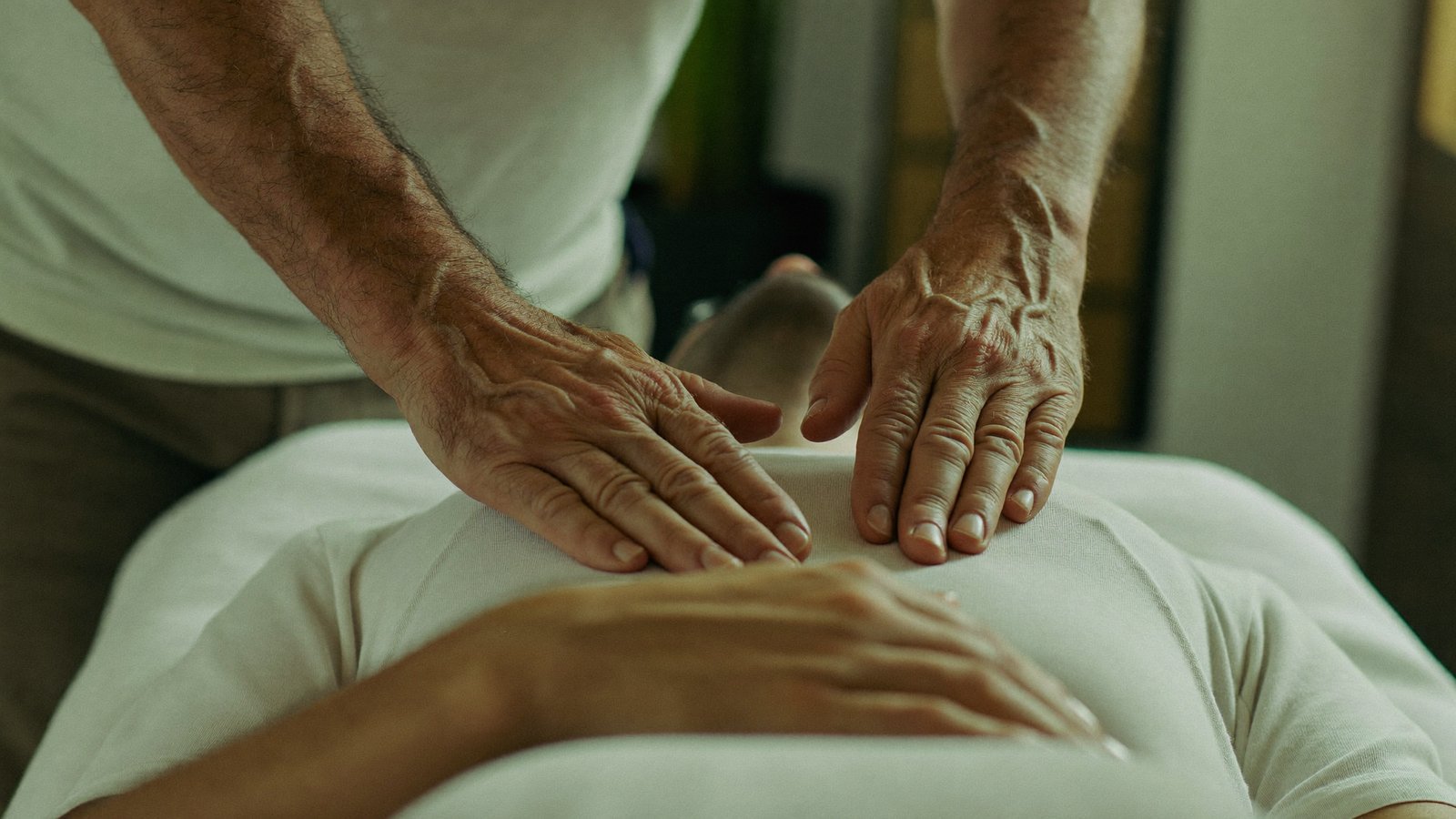
Reiki is a Japanese practice in which the practitioner rests their hands lightly on or just above your clothed body, staying with each area for several minutes. There's no pressure, no manipulation of muscle or tissue, and nothing you have to do. The aim is simple: to help your body relax and your nervous system settle. Many people describe a spreading warmth, a gentle tingling, or simply the feeling of a busy mind going quiet. Others notice little on the table but feel unmistakably calmer afterward. Both are normal.
Because Reiki asks nothing of the body, it's well suited to exactly the moment before surgery, when you may be sore, tired, restricted in movement, or simply too keyed up for anything more assertive. You stay fully clothed, lying down or seated, and the session is quiet and unhurried from start to finish.
What the research suggests about Reiki and pre-op anxiety
Reiki is a complementary approach, and it's important to be honest about what the evidence does and doesn't show. There's no research suggesting Reiki treats a surgical condition or changes a surgical outcome, and it should never be used in place of the care your medical team provides. What a growing body of small studies does suggest is that Reiki may help with the anxiety around a procedure. Randomized trials in patients preparing for cardiac surgery and gallbladder surgery have reported lower preoperative anxiety and surgical fear in the groups that received Reiki, and reviews of Reiki in integrative cancer care consistently point to improvements in anxiety, pain, and overall sense of well-being after sessions.
The findings aren't uniform, and some studies show more modest or mixed results, which is exactly why careful language matters here. Reiki is best understood as supportive care: a way to feel more rested and less braced going into your procedure, offered alongside, and never instead of, everything your surgeons and anesthesiologists are doing.
What a pre-op Reiki session looks like
Your session begins with a short conversation about what's coming up, how you've been sleeping, and anything about your body or your surgery that's useful for me to know. From there, you settle onto the table fully clothed. I rest my hands lightly at a series of places, the head, shoulders, hands, and feet among them, staying at each for several minutes while you do nothing but breathe and rest.
Most people find their breathing slows on its own within the first few minutes. It's common to drift toward sleep, and that's completely fine. When we finish, I'll give you a moment before you sit up, since a deeply relaxed body sometimes needs a beat to come back to the room. Sessions typically run 45 to 60 minutes. You can learn more about how I approach this work on the Reiki page.
How to time it around your surgery date
There's no single right schedule. Many people appreciate a session in the few days before surgery, when the waiting tends to feel heaviest, and some like to add one the day before as a way to arrive rested. Others simply want one quiet hour somewhere in the week leading up to their date. Any of these is reasonable. If you're navigating a longer road with a procedure and a recovery ahead of it, we can also talk about how gentle bodywork fits into your recovery care once you're cleared to receive it.
Keeping Reiki in its lane: what it is and isn't
Reiki supports comfort and calm. It doesn't diagnose anything, it doesn't treat your surgical condition, and it's not a reason to delay or skip any part of your medical care. If your anxiety before surgery is severe, persistent, or interfering with your sleep and daily life, please tell your physician or surgical team, because there are medical and psychological supports that can help, and they'll want to know. Reiki can sit comfortably alongside all of that. Think of it as one more way to care for yourself in a stretch that asks a lot of you, not as a replacement for anything your care team has planned.
Bryan Lindquist, LMT is a clinical massage therapist and Reiki Master with more than 20 years of experience, practicing in Salt Lake City at Flow Acupuncture (1204 E South Temple) and at Huntsman Cancer Institute's Wellness & Integrative Health Center, where Reiki is offered alongside massage for oncology patients. His oncology-informed practice includes Reiki, craniosacral therapy, manual lymphatic drainage, and orthopedic and post-surgical recovery work.
Frequently Asked Questions
Will Reiki interfere with my surgery or anesthesia?
No. Reiki is noninvasive and involves no medication, no manipulation, and nothing that enters the body, so it doesn't interact with anesthesia or your surgical plan. It's still worth telling your surgical team about any complementary care you're using, simply so your whole record is complete.
Do I have to believe in energy work for it to help?
No. Many people come for the deep rest and nervous-system settling a quiet session provides, regardless of how they think about the underlying mechanism. You can simply lie down and let your body downshift.
When should I schedule Reiki before surgery?
Many people like a session in the few days before surgery, and some add one the day before. There's no fixed rule. Even a single session in the week leading up to your date can be a useful way to rest and steady yourself. We can work around your pre-op schedule.
Is Reiki safe if I'm medically fragile or facing a major operation?
Reiki is one of the gentlest options available, since it asks nothing of your body and involves no pressure or movement. It's used in integrative cancer care for exactly this reason. It supports comfort and calm alongside your medical care, and it's never a substitute for the treatment your physicians have planned.
Facing a surgery date and feeling the weight of it?
Still, gentle Reiki to help you rest and steady yourself beforehand. New clients welcome.
Book a Session