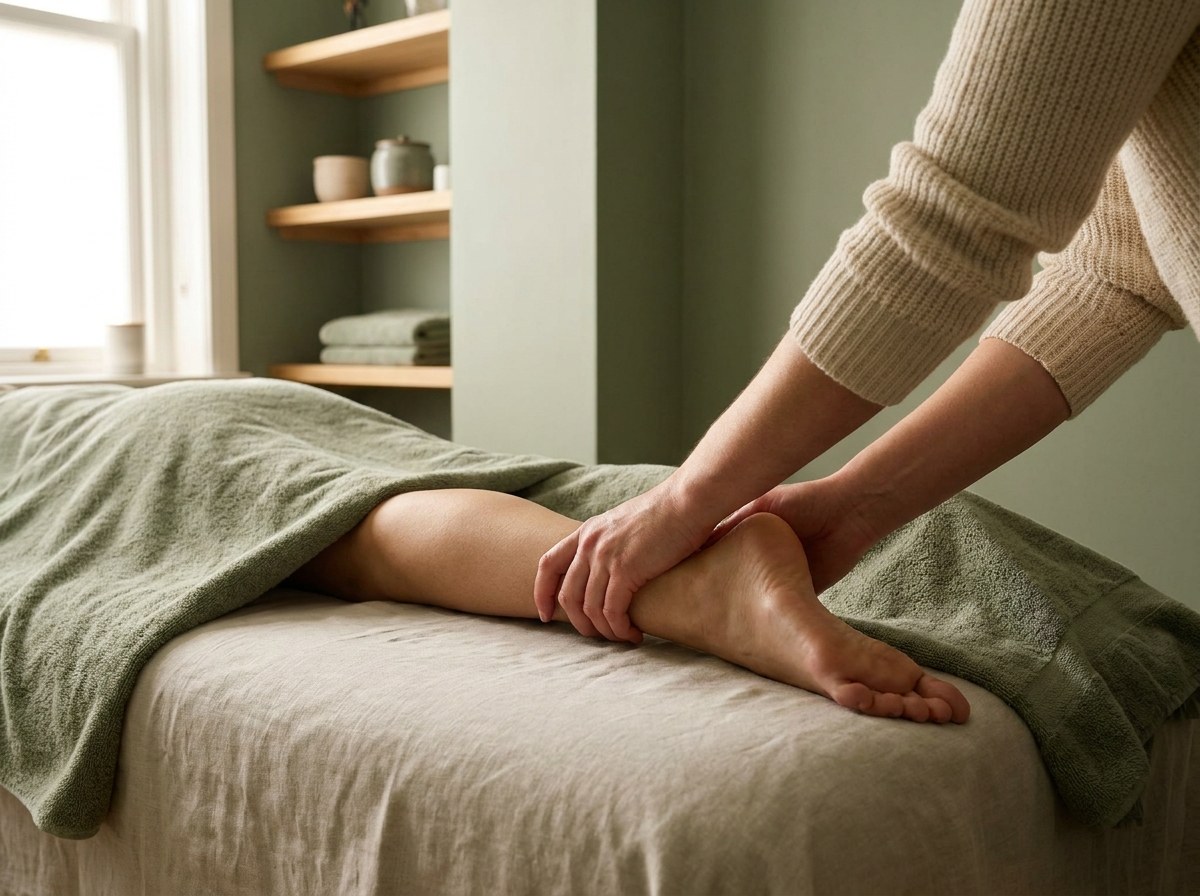
Utah summers fill up fast — trailheads at dawn, weekend rides up the canyons, pickleball leagues, the first long run back after months of winter mileage. It's also the season I see the most sprains, strains, and overuse injuries walk through the door. This is a practical look at what's actually happening in these injuries, when massage helps, and when it isn't the right first step.
Why summer injuries spike
Activity level jumps quickly in the summer, often faster than tissue can adapt. A body that's been sedentary or lightly active through winter suddenly takes on trail runs, long hikes with elevation gain, or a return to a sport after months away. That gap between ambition and conditioning is where most of these injuries come from: ankle and knee sprains from uneven trail terrain, hamstring and calf strains from sudden sprints, IT band irritation from a jump in mileage, plantar fasciitis from more time on hard surfaces, and the general soreness of asking a deconditioned body to do more than it's ready for.
How orthopedic massage supports recovery
Orthopedic massage is assessment-based — before any hands-on work, I want to understand what happened, how the injury has behaved since, and what's been tried already. From there, the work is targeted: soft-tissue techniques and myofascial release aimed at reducing swelling and adhesion, restoring range of motion, and addressing the compensation patterns that build up when you're favoring an injured area. It won't accelerate ligament healing beyond the body's own timeline, but it can meaningfully ease pain, reduce stiffness, and help you move more normally while the underlying tissue repairs.
When to start
Timing matters. For an acute sprain or strain, the first 72 hours are generally best spent on rest, ice, and — if there's significant swelling, bruising, or you can't bear weight — a medical evaluation to rule out a fracture or a more serious ligament tear. Once that acute window has passed and anything serious has been ruled out, orthopedic massage can be a useful part of the recovery plan alongside physical therapy, not instead of it.
What a session looks like
We start with a real conversation about the injury and your goals, then move into targeted, assessment-based work on the affected area and the tissue around it. You're always in control of pressure and intensity — this should never feel aggressive, especially on a healing injury. For deeper post-surgical recovery work rather than an acute sports injury, see Recovery Care.
Bryan Lindquist, LMT is a clinical massage therapist practicing in Salt Lake City at Flow Acupuncture (1204 E South Temple) and at Huntsman Cancer Institute's Wellness & Integrative Health Center, with more than 20 years of clinical experience in orthopedic and post-surgical care.
Frequently Asked Questions
How soon after a sports injury can I get a massage?
For most acute sprains and strains, it's best to wait roughly 72 hours before direct hands-on work over the injured area — rest, ice, and a medical evaluation come first if there's significant swelling, bruising, or inability to bear weight. Gentle work on surrounding areas can often begin sooner. If a fracture or significant ligament tear is possible, see a physician before scheduling massage.
What kinds of summer injuries does this help with?
Ankle and knee sprains, muscle strains, overuse patterns from hiking or running, IT band tightness, plantar fasciitis, tennis elbow, and general delayed-onset muscle soreness (DOMS) from a big weekend on the trail or the court are all common summer presentations this work can support.
Is this a substitute for seeing a doctor or physical therapist?
No. Orthopedic massage complements medical care and physical therapy — it doesn't replace diagnosis or treatment for fractures, significant ligament or tendon tears, or injuries that aren't improving. If something feels serious, get it evaluated first.
How many sessions will I need?
It depends on the injury. A mild strain might respond within a couple of sessions; a more stubborn overuse pattern or a recovering sprain often benefits from a short series. We'll map out a realistic plan at your first visit.