Manual lymphatic drainage gets mentioned a lot — in post-surgical recovery guides, oncology care plans, and increasingly in mainstream wellness conversations. But what it actually is, how it works, and who genuinely needs it tends to get lost in vague descriptions of "detoxing" and "boosting immunity." This is a plain-language explanation of what MLD is, what it does physiologically, and who is likely to benefit from it.
What the lymphatic system does
The lymphatic system is a network of vessels, nodes, and organs that runs parallel to your circulatory system. Its primary jobs are fluid balance and immune function. As blood circulates through your tissues, some fluid leaks out into the interstitial space — the fluid-filled area between your cells. The lymphatic system collects that excess fluid, filters it through lymph nodes, and returns it to circulation.
When the lymphatic system is working well, you don't notice it. When it's compromised — through surgery, illness, injury, radiation, or congenital factors — fluid accumulates. That accumulation is swelling, and in chronic or severe cases, it becomes lymphedema.
What manual lymphatic drainage is
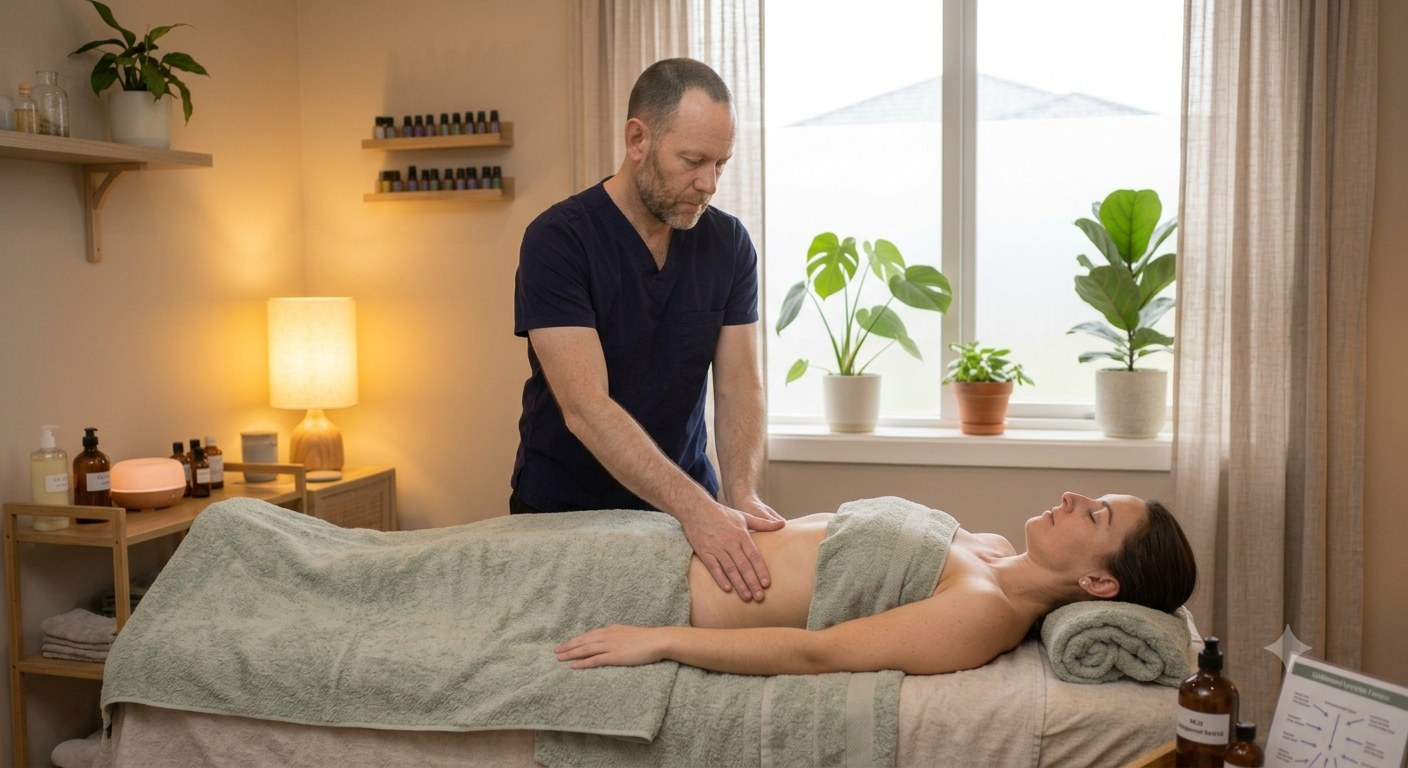
MLD is a specialized technique developed to stimulate lymphatic flow. Unlike conventional massage, which targets muscle and connective tissue using moderate to deep pressure, MLD uses very light, rhythmic, skin-level movements — because lymphatic vessels sit just beneath the skin and respond to gentle, wave-like stretch, not compression. A session looks nothing like what most people expect from massage: the pressure is feather-light, the movements are repetitive and rhythmic, and the pace is slow.
Most people find MLD deeply relaxing — often sedating. The sessions tend to activate the parasympathetic nervous system strongly, and many clients fall asleep during the work.
Who genuinely benefits from MLD
MLD is a clinical modality with specific indications — it's not a general wellness treatment in the way relaxation massage is. The people who benefit most fall into a few clear categories:
- Lymphedema. MLD's primary clinical application. Lymphedema affects people after cancer surgery involving lymph node removal, after radiation therapy, and in some congenital cases. MLD is a cornerstone of Complete Decongestive Therapy, the standard treatment protocol for lymphedema.
- Post-surgical recovery. Surgery disrupts local tissue and often impairs lymphatic drainage in the affected area. Post-op MLD, begun in the appropriate window with the surgical team's clearance, can significantly accelerate swelling reduction and support more organized healing.
- Oncology care. People in active cancer treatment, recovery, and survivorship benefit from MLD for managing treatment-related swelling and reducing lymphedema risk after lymph node dissection. I work with oncology clients at Huntsman Cancer Institute, and MLD is a routine part of that care.
- Chronic swelling from injury or illness. Autoimmune conditions, fibromyalgia, chronic venous insufficiency, and repeated soft-tissue injuries can respond well to MLD as part of a broader management approach.
What MLD is not
It's worth being direct about this: MLD is not a weight-loss tool, a "detox" treatment, or a general wellness service that benefits everyone. Despite what you may have read, there's no credible evidence that lymphatic drainage massage helps healthy people lose weight, eliminate toxins, or become "red-carpet ready." In a body with a healthy, functioning lymphatic system, MLD produces relaxation — but not the specific physiological effects that matter clinically.
What to expect in a session
Your first MLD session begins with a detailed intake — health history, any surgeries or medical conditions, current medications, and your specific goals. You'll remain clothed or lightly draped on the table. The work begins at the major lymph node clusters before moving to the areas of swelling or concern. The pressure is genuinely light; first-time clients often ask if it's "doing anything." The answer is yes — it's just working with a different tissue system than most massage does.
Sessions are typically 60 minutes. For active lymphedema management or early post-surgical work, more frequent sessions — two to three times per week initially — are often appropriate before tapering.
Bryan Lindquist, LMT is a clinical massage therapist practicing in Salt Lake City at Flow Acupuncture (1204 E South Temple) and at Huntsman Cancer Institute's Wellness & Integrative Health Center. He specializes in manual lymphatic drainage for post-surgical recovery, oncology care, and lymphedema management.
Frequently Asked Questions
How is MLD different from a regular "lymphatic massage"?
True manual lymphatic drainage follows the anatomical pathways of the lymphatic system using specific, validated techniques developed for clinical use. "Lymphatic massage" is sometimes used loosely to describe any light massage — if you're seeking MLD for a clinical condition, make sure your therapist has specific MLD training, not just general massage training.
How many sessions will I need?
For post-surgical recovery, 3 to 6 sessions over the first few weeks is a common starting point. For active lymphedema management, ongoing care is typically needed — often tapering from 2 to 3 sessions per week to monthly maintenance as the condition stabilizes.
Does MLD hurt?
No. MLD uses extremely light pressure and should feel gentle throughout. If a session is causing discomfort, the pressure is too heavy for what you need.
Can I do MLD at home between sessions?
Simple self-drainage techniques can be taught as part of a treatment plan, particularly for lymphedema management. I'll walk you through these if they're appropriate for your situation.
Managing swelling or lymphedema?
Gentle, oncology-informed lymphatic care. New clients welcome.
Book a Session